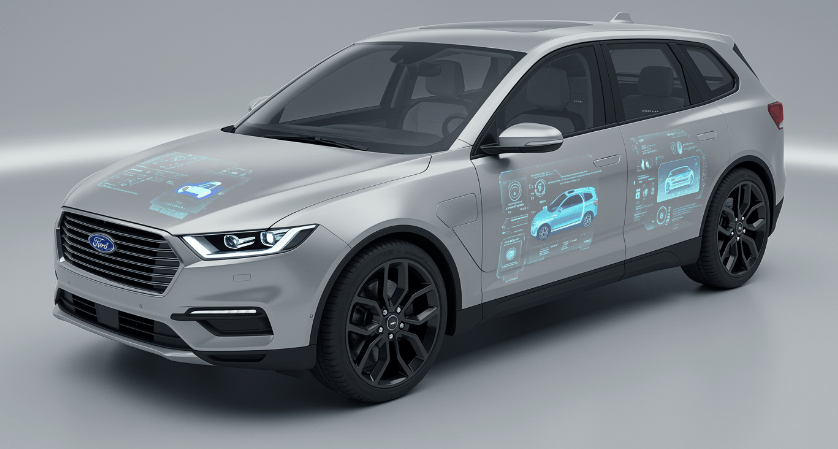
In a surprising and strategic shift, Ford Motor Company has announced the discontinuation of its multi-billion-dollar software-defined vehicle (SDV) initiative, a cornerstone of its broader transformation into a high-tech automaker. The decision marks a significant retreat from the company’s aggressive push to compete with industry leaders like Tesla and Rivian in the race toward fully integrated, over-the-air-updatable vehicles.
Sources familiar with the matter say the program, which had been in development for several years and reportedly cost Ford more than $3 billion, faced persistent delays, technical hurdles, and internal resistance. The automaker will now pivot toward a more modular and incremental approach to vehicle software integration.
“We’ve made the difficult but necessary decision to reallocate resources away from our centralized SDV program,” said a Ford spokesperson. “This allows us to focus on scalable solutions that deliver value faster and with fewer risks.”
A Bold Vision Meets Real-World Challenges
Launched under former CEO Jim Farley’s tech-forward vision, the SDV program aimed to create a unified software architecture across Ford’s entire future lineup. It was intended to enable seamless over-the-air updates, advanced driver-assistance features, and a new generation of connected services — all designed to generate recurring revenue streams and improve customer retention.
The initiative also included partnerships with major tech firms, including Google and Red Hat, and involved building an in-house software team known as Team Edison , modeled after Silicon Valley startups. However, internal sources revealed friction between traditional engineering teams and software developers, along with difficulties integrating legacy systems with modern platforms.
Industry-Wide Reassessment
Ford’s move comes amid a broader reassessment across the auto industry regarding the feasibility and cost of full-scale software-defined vehicle architectures. While companies like Tesla have successfully pioneered such systems, others — including General Motors and Volkswagen — have scaled back or restructured their own ambitious software programs in recent months.
Analysts suggest that the complexity and expense of developing proprietary software stacks are proving too great for even the largest automakers. “There’s a growing realization that building a car is not the same as building an iPhone,” said Sam Abuelsamid, an automotive analyst at Guidehouse Insights. “Software-defined vehicles require a completely different operational model — one that many legacy automakers are still struggling to adapt to.”
Implications for Ford’s Future
Despite halting the centralized SDV program, Ford reiterated its commitment to electrification and digital innovation. The company plans to continue rolling out software features through existing platforms, including its BlueCruise hands-free driving system and SYNC+ infotainment suite.
Additionally, Ford confirmed it will maintain its partnership with VW on MEB-based electric vehicles in Europe and continue investing in its Michigan Central tech hub in Detroit, where much of the SDV research was conducted.
However, the cancellation raises questions about Ford’s long-term competitiveness in the EV and software space. With rivals doubling down on vertical integration and proprietary tech, Ford’s shift could leave it relying more heavily on third-party suppliers for critical software components.
Looking Ahead
As Ford recalibrates its strategy, all eyes will be on how the company balances innovation with financial discipline. The automotive landscape is rapidly evolving, and while Ford may be stepping back from its most ambitious software goals, the race for the next generation of smart, connected vehicles is far from over.
 Autos Magazine
Leave a comment