Introduction
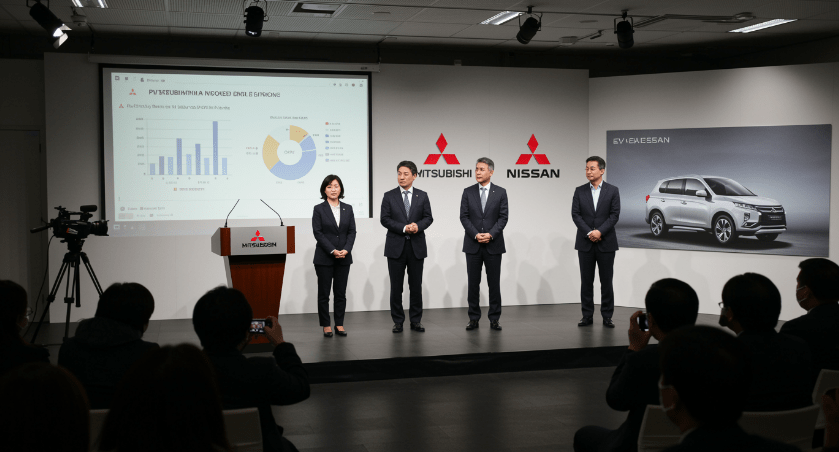
In a bold move to reclaim its stake in the rapidly evolving electric vehicle (EV) market, Mitsubishi Motors has announced a landmark collaboration with Nissan, signaling a strategic reentry into the EV sector. This partnership leverages Nissan’s extensive EV expertise and Mitsubishi’s global manufacturing footprint to accelerate the development and deployment of next-generation electric vehicles. The alliance aims to position both automakers at the forefront of the industry’s green transition.
Historical Context: From Pioneer to Pause
Mitsubishi once held a pioneering role in electrification with the 2009 launch of the i-MiEV, one of the world’s first mass-produced EVs. Despite its innovative edge, the i-MiEV struggled with limited range and high costs, leading Mitsubishi to scale back its EV ambitions by the mid-2010s. The company shifted focus to plug-in hybrids, such as the Outlander PHEV, while global competitors surged ahead. Now, with regulatory pressures intensifying and consumer demand for EVs reaching critical mass, Mitsubishi is doubling down on electrification—this time with Nissan as its key ally.
Why Partner with Nissan?
Nissan, a leader in the EV space with its best-selling Leaf model and membership in the Renault-Nissan-Mitsubishi Alliance, offers Mitsubishi critical advantages:
- Shared Technology : Access to Nissan’s advanced battery systems, electric drivetrains, and platform architectures, including the CMF-EV platform.
- Cost Efficiency : Economies of scale through joint procurement, R&D, and manufacturing.
- Global Reach : Combining Nissan’s established EV distribution networks with Mitsubishi’s strong presence in Southeast Asia and Latin America to target emerging markets.
Collaboration Details: Synergy in Electrification
The partnership will focus on co-developing affordable, high-performance EVs tailored to diverse markets. Early reports suggest Mitsubishi’s upcoming EV lineup will include rebadged Nissan models, as well as vehicles built on shared platforms. Notably, the automakers are exploring joint ventures in solid-state battery technology—a potential game-changer for range and charging speeds. By integrating Nissan’s EV credentials with Mitsubishi’s reputation for durability, the alliance aims to deliver compelling offerings across passenger and commercial vehicle segments.
Future Outlook: Ambitious Goals for Carbon Neutrality
Mitsubishi has pledged to achieve carbon neutrality across its operations by 2050, with EVs forming the cornerstone of this strategy. The company plans to launch multiple electric models by 2030, starting with a compact SUV based on Nissan’s Ariya platform, slated for release in 2025. Additionally, Mitsubishi will expand its EV charging infrastructure in underserved regions, supported by Nissan’s experience in ecosystem development.
Challenges Ahead: Navigating a Crowded Market
Despite the optimism, hurdles loom. The EV sector is fiercely competitive, dominated by Tesla, BYD, and legacy automakers rapidly electrifying their fleets. Mitsubishi must overcome lingering skepticism from its earlier EV setbacks while differentiating its products in a saturated market. Success will hinge on pricing strategy, battery innovation, and seamless integration of Alliance resources.
Conclusion: A Second Chance to Lead
Mitsubishi’s reentry into the EV arena, powered by its renewed collaboration with Nissan, marks a pivotal chapter for both automakers. By pooling their strengths, they are well-positioned to capitalize on the global shift toward electrification. If executed effectively, this partnership could transform Mitsubishi from a cautious observer to a key player in the EV revolution, proving that timing—and teamwork—can redefine an industry’s second chances.
 Autos Magazine
Leave a comment