Introduction
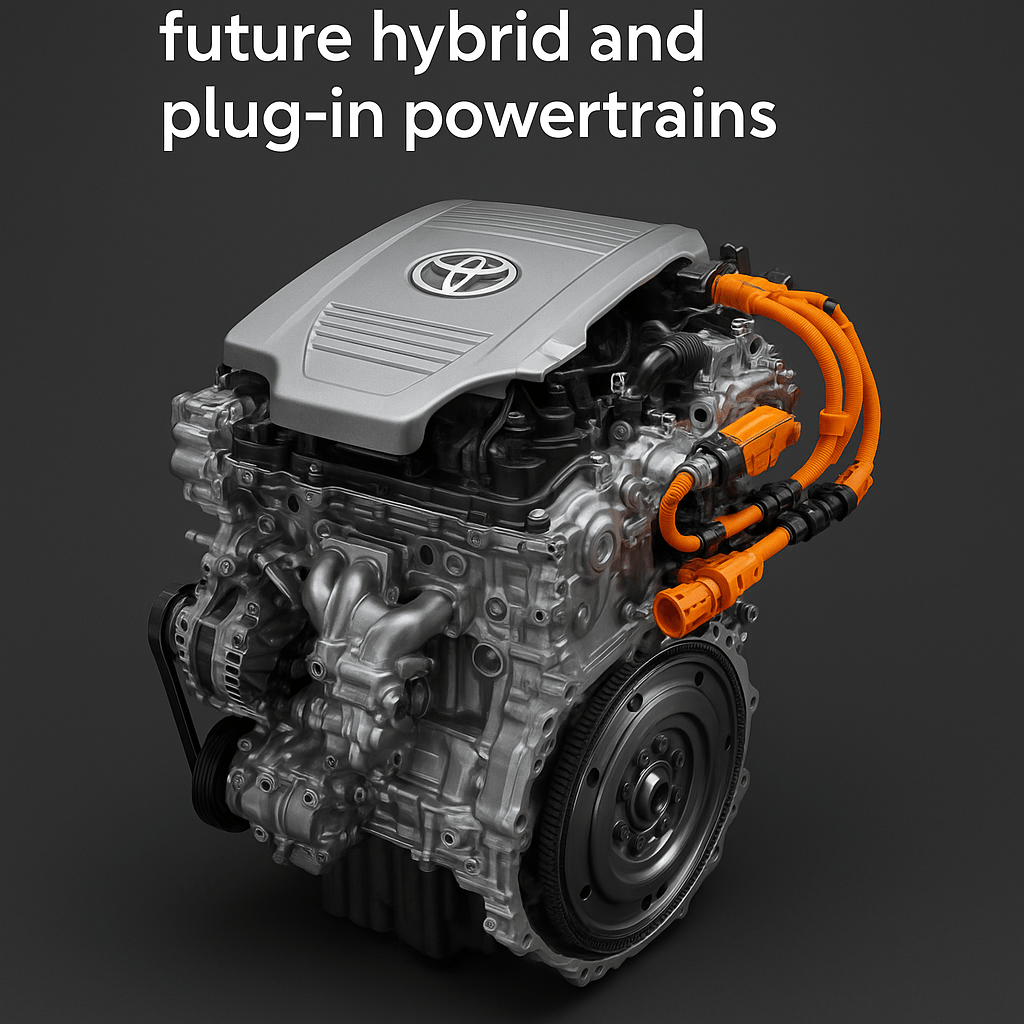
Toyota is making bold moves in the automotive world with the introduction of its entirely new family of internal combustion engines. In a time when many manufacturers are pivoting sharply toward electric vehicles (EVs), Toyota is taking a different road—one that still includes EVs, hybrids, and now, a new generation of cleaner, more powerful combustion engines.
This decision has sparked a lot of interest—and perhaps concern—among competitors. Here’s why the industry should be paying close attention.
🔧 A New Era of Efficiency and Performance
Toyota unveiled its next-gen engine lineup in mid-2024 with a clear goal: to redefine what’s possible with gasoline-powered and hybrid vehicles. Unlike traditional designs, these new engines are built with modular architecture, allowing them to be used flexibly across various platforms, from compact sedans to large SUVs and even trucks.
Key Highlights:
- Smaller Displacement, Bigger Power: New engines ranging from 1.5L inline-3 to 2.0L inline-4 deliver enhanced fuel efficiency without sacrificing performance.
- Optimized for Hybrids: Designed from the ground up to work seamlessly with Toyota’s hybrid electric systems.
- Lower Emissions: These engines meet and even exceed upcoming global emissions standards for 2030.
⚙️ Deep Dive: What’s Under the Hood?
Toyota’s engine development team focused on thermal efficiency and hybrid integration. The result? Engines with up to 50% thermal efficiency—a huge leap in the world of combustion motors.
The use of lean-burn combustion, lightweight materials, and integrated exhaust manifolds shows Toyota’s commitment to maximizing range and reducing fuel use. These engines are also geared toward operation at lower RPMs, helping to minimize wear and emissions.
Many models, including future versions of the Corolla, Camry, RAV4, and Highlander, are expected to integrate these state-of-the-art engines.
⚡ EVs Aren’t Going Away—but Hybrids Will Thrive
While Toyota continues to invest in solid-state batteries and EVs like the bZ series, it recognizes that many global markets don’t yet have the infrastructure to go fully electric.
That’s where the new engines come in—they’re part of Toyota’s multi-pathway strategy, which includes:
- Battery Electric Vehicles (BEVs)
- Plug-in Hybrids (PHEVs)
- Hydrogen Fuel Cell Vehicles (FCVs)
- Hybrid Powertrains with New Engines
This strategy allows Toyota to adapt to global markets more quickly than competitors who have adopted an EV-only approach.
🔥 Why Should Competitors Be Worried?
While brands like GM, Ford, and Volkswagen aggressively shift to full-electric lineups, they may be alienating key markets where EVs are not yet viable due to cost or infrastructure.
Toyota’s new engine lineup allows the brand to:
- Serve a broader range of customers across income levels and geographies.
- Maintain compliance with stricter emission laws using proven hybrid tech.
- Keep production costs reasonable with flexible platforms and shared components.
In short, Toyota isn’t abandoning EVs—it’s expanding its reach by keeping capable, clean-burning engines in the game.
🛠️ What’s Next?
Toyota plans to roll out the first models featuring these engines in late 2025 and into early 2026. Expect updates to popular vehicles like:
- Toyota Corolla
- Toyota Camry
- Toyota RAV4
- Toyota Tacoma & Hilux (with turbocharged hybrid powertrains)
The company is also collaborating with Mazda and Subaru to co-develop future engine technology, which could introduce this new tech across more Japanese automakers.


Leave a comment